


Jørgen Kjær Jensen has been employed by Royal Arctic Line since 1989. He is the master of the settlement ship M/S Pajuttaat
By Hanne Baltzer
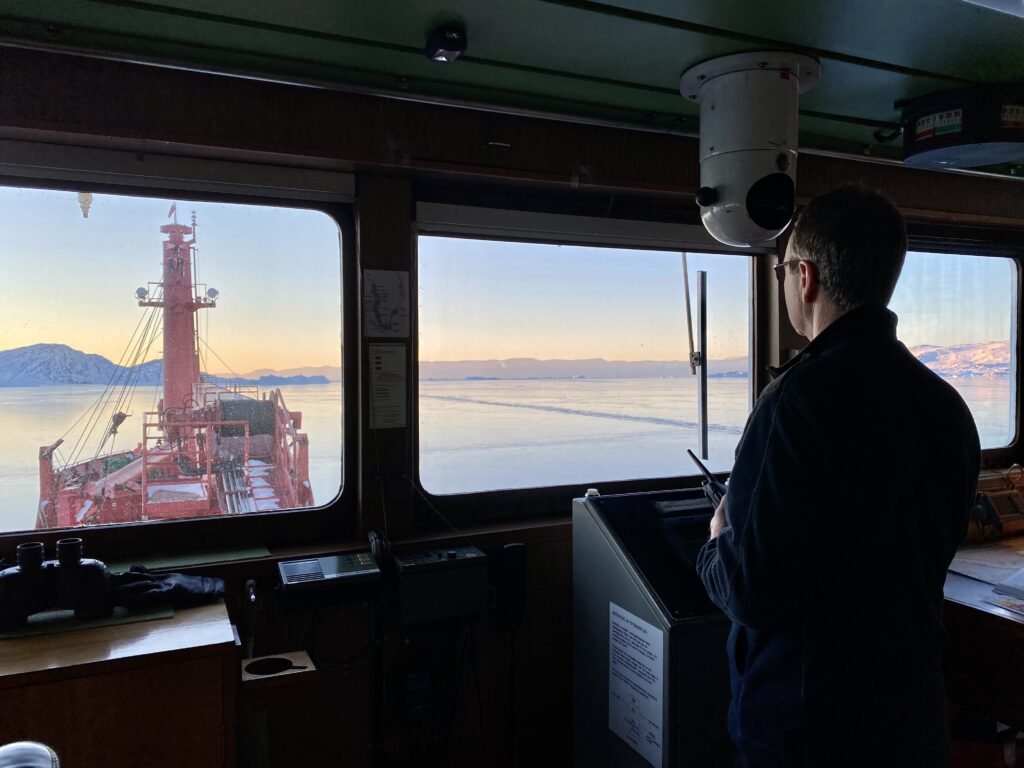
Seen from the bridge at Pajuttaat, the view is unrivalled. Here in beautiful West Greenland, Jørgen Kjær Jensen knows every little village in Disko Bay like the back of his hand, but also the larger towns such as Ilulissat, Qeqertarsuaq, Qasigiannguit and Aasiaat, and just north of Disko Bay: Uummannaq. The ship is designed for Arctic conditions and is equipped with a crane and barge so it can operate regardless of docking conditions.
"We sail goods to the settlements in Disko Bay and Uummannaq Bay. We service the settlements depending on wind and weather. From December to February/March there is usually ice, but not this year, so we sail an extra trip and pick up the many fish that have been frozen. This helps the fishermen to empty out their stocks," says Jørgen. Royal Arctic Line is a lifeline for Greenlandic communities. The shipping company guarantees supplies to the entire country.
We do it ourselves
Royal Arctic Line has regular southbound and northbound connections between Sweden, Denmark, the Faroe Islands, Iceland and Greenland. Every week. All year round.
The goods are shipped to Nuuk from Denmark, for example. They are transferred to the coastal ship that sails to Aasiaat. Here they are unpacked and put on pallets, loaded onto the settlement ship, and the pallets are then delivered to the respective locations. Pajutaat sails with everything except petrol and oil.
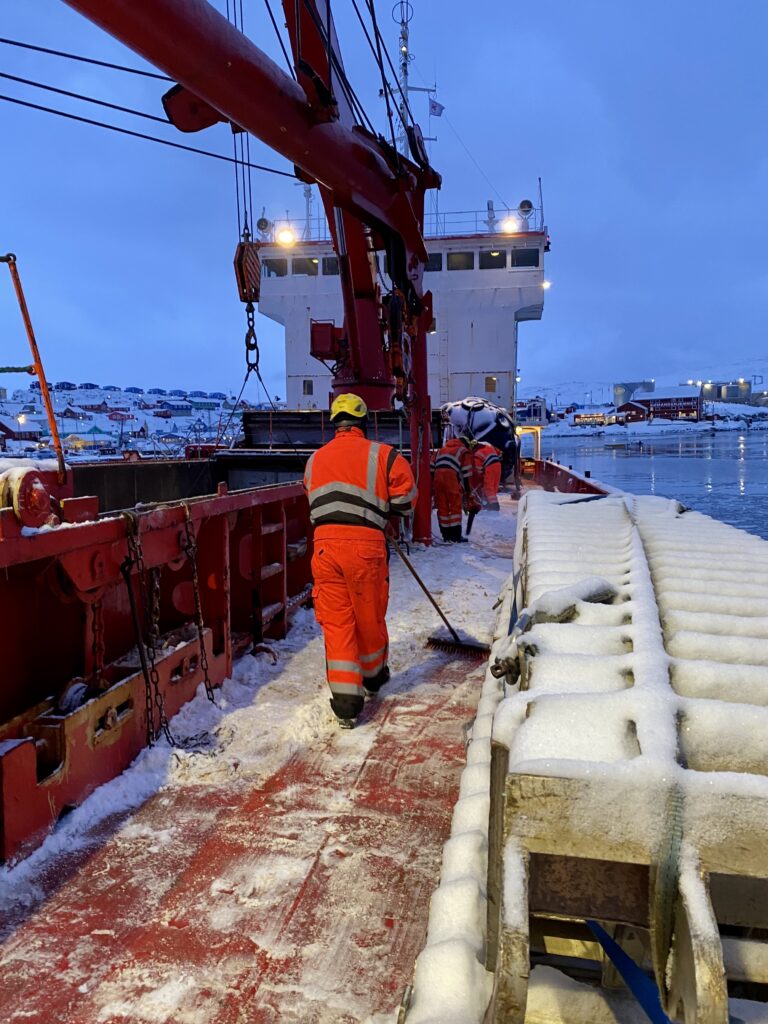
"In the big harbours there are pilots etc. We take care of ourselves. In some of the settlements there are maybe only 30 people living there. There's no real harbour, so we have to hoist the pallets ashore. We do everything ourselves, even on land. Piloting and loading."
"We have to follow the Greenlandic mindset that what we can't do today, we can do tomorrow. This is especially true in the off-season, but when it's autumn and winter is approaching, it can be stressful as the supplies have to arrive before everything freezes. Sailing to the settlements is a big challenge. It's demanding, but exciting," he adds.
Community fixes a lot
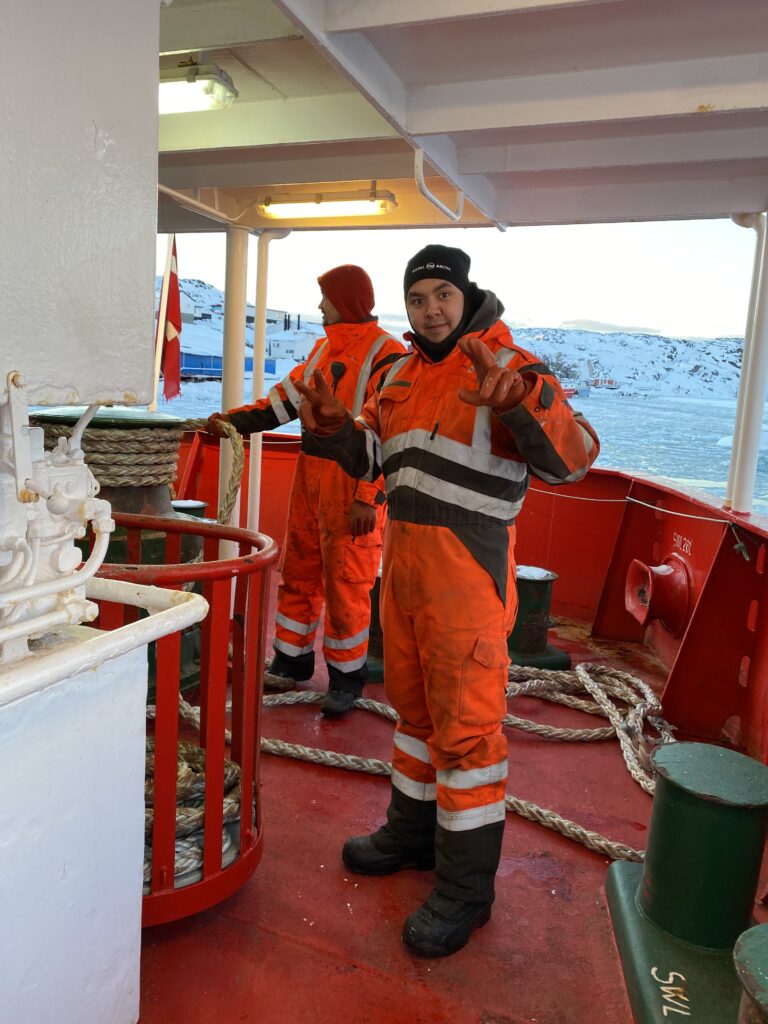
There are 12 people on board the coaster. 8 Greenlanders and 4 Danes. At the moment there are two Greenlandic first officers. The stewardess on board is also important: "If she's in a good mood, it rubs off on everyone. The one we have now is sweet and smiling. That means a lot. We've always sailed with a mixed crew. I've also had female helmsmen and engineers. I don't think about it too much. They work just as well as men."
Several of the crew are skilled in various ways, so they know a few tricks: "When there's a problem, as captain you have to remember to ask around among the employees. Greenlanders typically come from small communities where they learn to fend for themselves and are incredibly good at finding solutions, but also at helping each other. For me, good leadership is about involving people, asking them what they want and listening to them when they need it. It's important to me that people are heard because they are good and rarely angry. Even if it's the middle of the night and everything is cold and wet."
My second home country
"I've been sailing in Greenland for over 30 years and am one of the oldest in the company. Time goes by! You're either fascinated by Greenland or you hate it. For me, Greenland is my second home, even though I can't speak the language. I know a lot of people here."
Jørgen works 6 weeks out, 6 weeks at home when things go according to plan. "Home" is Thurø near Svendborg. At the moment. the fixed working hours are challenged because it is the Greenlandic corona directorate that orders the tickets. In January, for example, there were no tickets for seamen.
"This means that others have to work maybe an extra fortnight, and it's not good for family life etc. when you don't know when you're coming home. It's simply unwillingness on the part of the authorities when they don't consider the cost to the individual. Not many people listen to the seafarers. I have colleagues in other shipping companies who have been away for months. It should be more flexible. "
A home away from home
The seamen's home in Aasiaat is well known. Jørgen last stayed there from 28 December until he embarked on 4 January 2021. He had to be in quarantine for at least five days: "We use the seamen's home all the time - to and from the ship. Even though it was closed due to status, I could still stay there while I was in quarantine and have food brought to my room. It's great. If you stay in a hotel, you typically don't know anyone. At the seamen's home, we know someone, such as the manager Søren, who as an old sailor knows our jargon and profession. It's very personal and family-like to live there. So 'home' is a good word."
At the seamen's home, they are also used to dealing with various restrictions and other corona-related issues.
On board Pajuttaat, they also meet staff from the seamen's home, such as the seamen's missionary and a volunteer: "We really appreciate visits from the seamen's home. We get to know each other as they come once a week for coffee time. It's nice and cosy. I'm not a particularly religious person. I don't pray to God, although of course I've been scared, because I have a deep respect for very bad weather up here," explains Jørgen.
Internet and interest
Being a captain is a job that involves a lot of different things. From administration, staff care, logistical challenges to steering in all kinds of weather. But even a captain has time off: "I might go for a walk in the village when I know the ship is OK. When I'm off duty, I like to read a good crime novel or call home to my family."
Compared to before, when Jørgen had to find a phone booth and call home for DKK 26 per minute, today he can Facetime or Skype without any problems as the internet connection is good.
"I do miss my family. I used to be allowed to bring them once a year, but that's not allowed anymore. My wife says she can't wait until I retire in about five years," he laughs. He believes he can physically feel the 30 years on the lake, where you also get tossed around and don't sleep much in "rubbish weather".
When asked if he is done sailing, he mentions that the cruise ships that sail around Greenland need pilots on board for one month a year. He would like that.
"The nature is simply amazing. After 14 days with lots of 'shitty weather', you completely forget the bad stuff when you look out from the ship. In the North Atlantic I've experienced winds of 55 metres per second several times, and I don't need that again. Up here, it's better to take shelter somewhere until the storm is over - typically after 24 hours."
Quote: We appreciate visits from the seamen's home in Aasiaat